
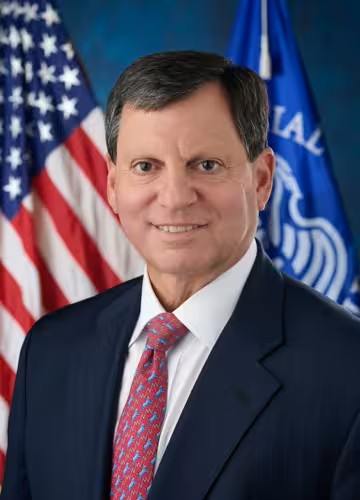
When Frank Bisignano steps into his new role as CEO of the Internal Revenue Service (IRS), the headlines may focus on the novelty of the appointment and the reorganization it implies.
But the deeper story is how a leader forged in the discipline and disruption of fintech is betting on applying those skills to two of the government’s largest public agencies.
Bisignano is no newcomer to complexity. For much of the past decade, he led Fiserv, one of the world’s largest payments and financial-technology firms, as it navigated consolidation, innovation, and fierce market dynamics. His tenure at Fiserv and earlier at First Data offers some clues about the capabilities and style he may bring to IRS and, concurrently, the Social Security Administration.
When Fiserv announced in May 2020 that Bisignano would succeed Jeff Yabuki as CEO, the company was entering a phase of aggressive growth and integration.
He inherited a sprawling suite of financial-technology infrastructure spanning account processing, merchant services, point-of-sale systems, digital channels, and more. Under his leadership, the company sought to expand its digital footprint, invest in automation, and scale core systems.
One of Bisignano’s signature accomplishments was his role in the merger and integration of First Data into Fiserv. Bisignano had led First Data prior to the merger, and orchestrated its evolution from a traditional payments processor into a technology-centric commerce enabler.
That merger, completed in 2019, significantly expanded Fiserv’s scale and product reach.
During his time at Fiserv, Bisignano also presided over growth in transaction volumes, enhanced operational scale, and efforts to modernise internal technology systems. According to the SSA’s profile of his background, under his leadership the company processed hundreds of millions of daily transactions, handled large-scale customer interactions, and pushed to deliver “modern solutions” for both financial institutions and consumers.
In earnings updates, Bisignano and Fiserv leadership often cited the company’s advantaged position at the intersection of merchant networks and financial institutions. In late 2024, Fiserv raised its profit guidance based on robust consumer spending, highlighting resilience in its core revenue streams even amid macro uncertainty.
Not all smooth sailing
That said, his time at Fiserv was not without controversy or challenge. Some reports have cited cost reductions, facility closures, and workforce reorganizations under his tenure. Critics have raised questions about culture, morale, and the human cost of streamlining.
Still, his track record positions him as a leader who had turned around legacy systems, integrated large-scale acquisitions, and pushed for efficiency and scale in payments and financial infrastructure.
It is that narrative on which the Trump administration appears to be placing its bet.
When Treasury Secretary Scott Bessent announced Bisignano’s appointment as IRS CEO, he cited his “exceptional track record of driving growth and efficiency in the private and now public sector.”
“Under his leadership at the SSA, he has already made important and substantial progress, and we are pleased that he will bring this expertise to the IRS as we sharpen our focus on collections, privacy, and customer service in order to deliver better outcomes for hardworking Americans.”
The logic, from the administration’s perspective, is that many of the technological, customer service, and data-driven challenges facing SSA and the IRS echo what large fintech firms confront daily.
Of course, government is not fintech, and public agencies operate under constraints – regulatory, political, budgetary, legal – that private firms rarely face in the same way. Whether Bisignano can translate his Fiserv playbook into improvements in tax administration, service delivery, and benefit payments remains to be seen.